Near Rome is Nettuno, a lively seaside city. The historic center of the seaside village is located overlooking the sea. In fact, Nettuno is a city on the Lazio coast between the Agro Romano and the Agro Pontino. It is bathed by the Tyrrhenian Sea. This town, surrounded by picturesque alleys, charming squares, historic buildings, preserves a rich food and wine tradition, the main protagonist of which is Cacchione wine.
Nettuno between history and tradition
It was originally called “Antium“, a territory that included the two cities of Nettuno and Anzio. Ancient “Antium” had many temples dedicated to pagan deities. Among these was the famous temple of the goddess Fortuna, which stood on the site where the church of San Francesco stands today. Then another temple complex dedicated to the demigod Hercules was probably located near the current Sangallo Fort. Finally, one of the two temples of the god Neptune was probably located below the current church of San Giovanni, located in the medieval village.
Instead, the many historic villas in the city date back to the 15th century. In this period, Villa Borghese or Bell’Aspetto, Villa Albani (today in the municipal area of Anzio) and Torre Astura were built in Nettuno. The two seaside cities were only divided in 1857. Pope Pio IX established the “Municipality of Anzio“, giving him a part of Nettuno.
The best beaches of Nettuno
The city of Nettuno is famous for its spacious beaches with fine white sand and crystal clear waters. Nettuno beach is framed by traces of past history and green spaces, such as the Foglino forest, a residual strip of the ancient Circeo and Terracina forest. One of the most beautiful and uncontaminated beaches is that of Torre Astura.
Nettuno is a city that overlooks the Tyrrhenian Sea, in Italy. In Nettuno beach is wide, with fine sand. The seaside resort also offers its visitors the beauty of art and history. In fact, on the beaches it is possible to find incredible traces of the passage of history and green spaces to explore. Furthermore, the equipped beaches of the coast offer numerous services, such as refreshment points, bars and pedal boat and boat rental services.
The pristine beach of Torre Astura
About 12 kilometers from the center of the city of Nettuno is the beach of Torre Astura, which houses the medieval watchtower. It built on the remains of an even older Roman settlement. The beach is located in a military area, therefore it is only accessible in the summer period. But the landscape here is idyllic. Small coves alternate along the coast, with the white sand separating the blue of the sea and the green of the pine forest. In fact, before reaching the beach you need to take a path that crosses the forest of fragrant pines and shrubs, a typical landscape of the Mediterranean scrub. Furthermore, the coast is dotted with archaeological remains, visible or submerged.
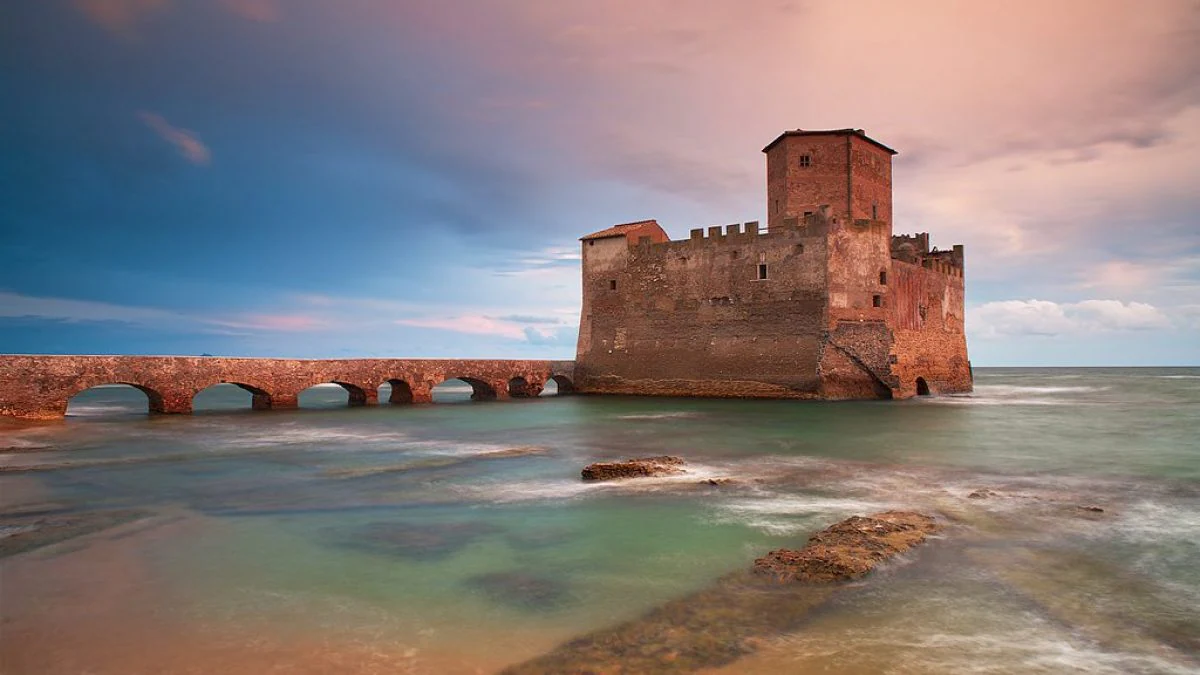
The Nettuno Polygon Cliff
The Poligono Cliff is about three kilometers from the city. It is also accessible only in the summer months after obtaining authorization from the military authorities. This is a solitary and quiet beach, with a wild appearance. In fact, there are no establishments or refreshment points.
Nettuno free beach of the Sanctuary of Santa Maria Goretti
Near the Sanctuary of Nostra Signora delle Grazie and Santa Maria Goretti di Nettuno there is the largest free beach in the whole city. The wide coastline, the shallow sea and the sandy seabed make the beach perfect for a family holiday. Furthermore, the ample parking available and the services in the area remedy every possible source of stress.
The Bagni Belvedere in the city of Nettuno
Beyond the tourist port, between the Port of Anzio and the Marina di Nettuno, there are the so-called “Bagni Belvedere“. This beach establishment, a few steps from the centre, was founded in 1972. It is welcoming, clean and much appreciated by families with children.
Nettuno what to see?
Is Nettuno worth visiting? Nettuno is not just sea, beaches and fun. The city still preserves an ancient heart intact, the Medieval Village. Here houses, churches and palaces are enclosed between walls and towers dating back to 1300. Today the village is the center of nightlife, where most of the pubs and clubs are concentrated.
In addition to the homes of many residents, among the alleys and suggestive squares there are also historic buildings. Inside there are also the seventeenth-century Doria-Pamphilj Palace and the sixteenth-century Baronial Palace. Now the medieval village is the center of nightlife.
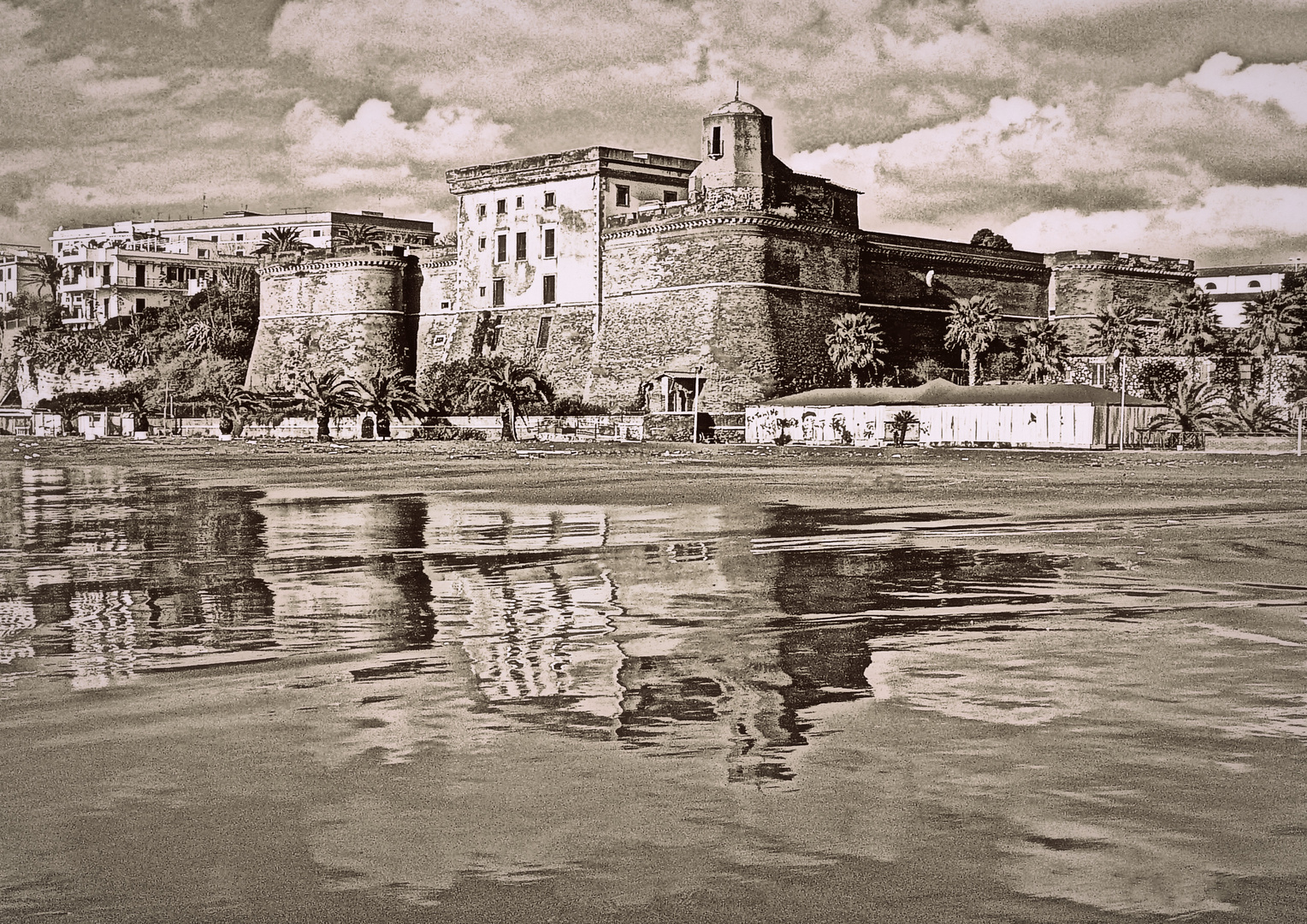
Also testifying to the ancient history of the city is Fort Sangallo. It built between 1501 and 1503 by Pope Alexander VI Borgia to defend the Papal State from attacks by corsairs and pirates. Designed by Sangallo the Elder, now houses the Beachhead Landing Museum (Museo dello Sbarco) and Antiquarium, with artifacts from archeological finds around the area.
Another historic building in Nettuno is Torre Astura. Located inside a military range, the maritime fortress with the pentagonal tower is surrounded by water. It is connected to the mainland by a bridge. In the area there is a pine forest where the Astura river flows.
Also there is the Fountain of Neptune. This is the god of the sea who gives the city its name. It’s placed on a shell pulled by two horses. A large memorial instead represents Nettuno military cemetery. The American Cemetery of Nettuno is dedicated to the American fallen of the Second World War. Nettuno also includes the innovative tourist port, inaugurated in 1986, with its sailing club. It is therefore the ideal city for sailing and Off Shore regattas, and hosts national and international events for all sailing classes.
The famous Madonna delle Grazie
The Neptune tradition also has a strong religious connotation. According to tradition, in 1550 the wooden statue of the Madonna and Child, the famous Madonna delle Grazie, was found at the mouth of the Loricina river. It had been transported from England to Naples in order to escape Henry VIII’s persecutions against Catholics.
However, only in 1661 the bishop of Albano Laziale begin the traditional and solemn procession of the Madonna delle Grazie. The wooden statue of the Madonna delle Grazie is preserved in the Sanctuary of Our Lady of Grace and of Santa Maria Goretti. It was built at the behest of the Passionist fathers in 1914, thanks to the help of Pope Pio X. Also in the sanctuary there is the crypt of Santa Maria Goretti.
The Church of San Giovanni Battista e Evangelista
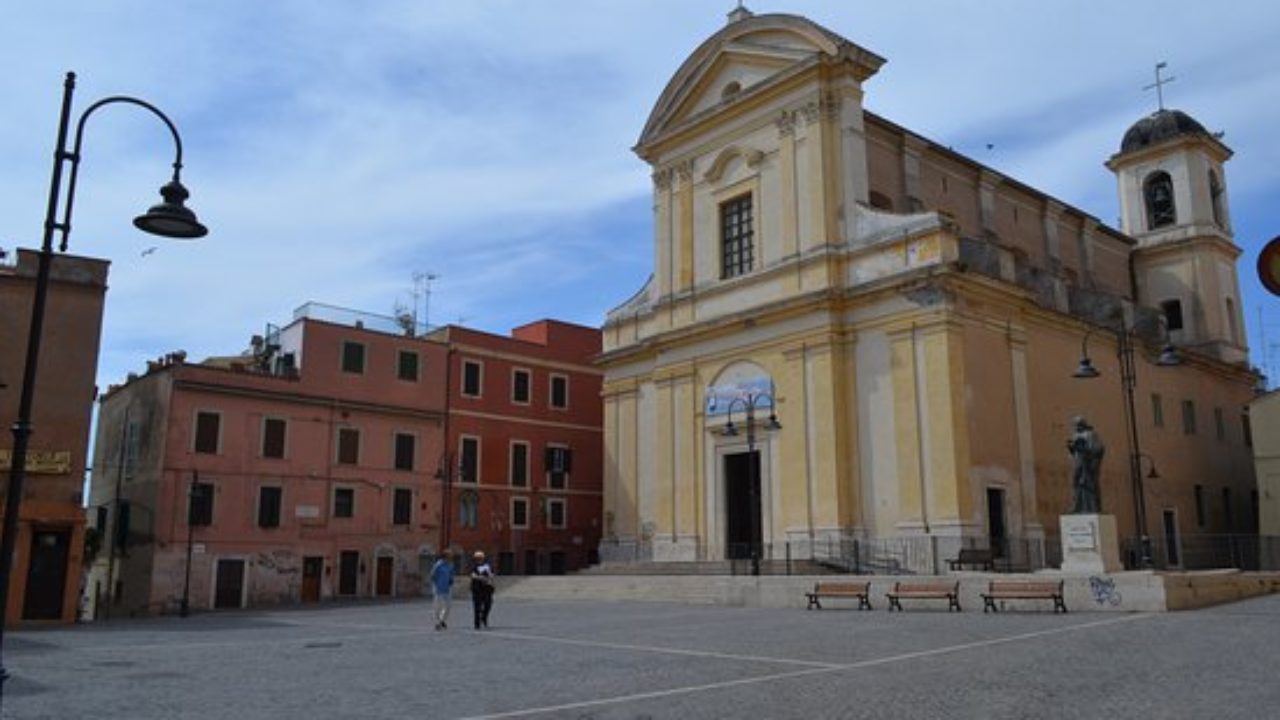
The heart of the town was still the borgo antico, woven of lordly palaces and simple houses, interlacement of alleys and small squares, all around the Collegiate Church, dedicated to Saints John the Baptist and Evangelist. Even though it dates back to the eighteenth century, it has older origins, given that tradition has it built on the ancient temple of the god Neptune. The interior is rich in decorations and preserves a gigantic organ. Outside there is the so-called “big bell”, one of the four bells located at the top of the 27 meter high bell tower.
The new tourist port of Nettuno
The city’s well-equipped tourist port was inaugurated in 1986, together with its Sailing Club. So the city became ideal for sailing and Off Shore regattas, and national and international events for all sailing classes. The port is 3 meters long, has 14 piers and 800 berths.
Where is Nettuno and how far is Nettuno from Rome?
Nettuno is also served by the Cotral regional bus service and by train Nettuno to Rome (Trenitalia). The station is located in the center of the city.
By car, the distance of the road route from Rome to Nettuno is 64.50 kilometers and the estimated travel time is approximately one hour. From the Grande Raccordo Anulare take exit 26 towards Via Pontina (SS148), towards Latina. Continue until the Anzio-Nettuno exit where you take the Nettunense road which must be followed up to Nettuno. Alternatively you can reach Nettuno along the coast road, passing through Ostia, Torvaianica and Anzio.
The city is a perfect stop even if you want to continue towards other destinations: Nettuno to Ponza, Nettuno to Pompeii.