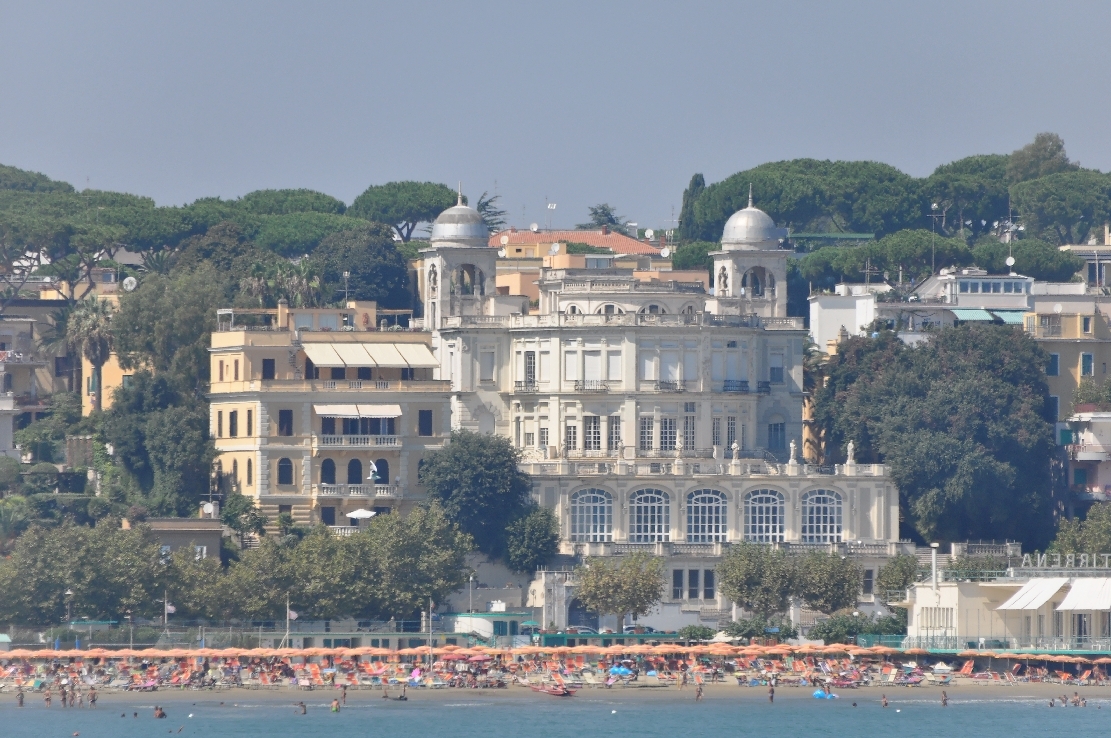
The Paradiso sul mare is also known as the Casino of Anzio or Paradisino. It is a historic Art Nouveau building built by the Roman architect Cesare Bazzani. It is located on the Zanardelli seafront in the city of Anzio.
The history of the Paradiso sul mare of Anzio
The building was designed in 1919 by the Roman architect Cesare Bazzani on behalf of Giuseppe Polli, entrepreneur and mayor of Anzio. It was inaugurated in 1924 and was built in line with the villas on the eastern coast of Anzio.
It was destined to be a place for important social events, such as fashion shows, conferences, exhibitions and even a gambling house. During the Second World War it was used as the headquarters of the Allied command after the landing in January 1944.
In 1968 the building was taken over by the province of Rome. Then it partially used as a school and boarding school for the State Professional Institute for Hotel and Catering Services. Due to the progressive deterioration of the building, in 2015 the use of the property was prohibited for the students of the Hotel Institute, who were permanently transferred.
Paradise on the sea is now owned by the municipality of Anzio. The vast rooms of the structure have mostly been used for the staging of contemporary art exhibitions.
The characteristics of the Art Nouveau building
The imposing Art Nouveau building with a semi-circular front is flanked by two domed towers. The two terraces facing the building are also semi-circular and directly overlook the beach of Anzio. Inside there were two gaming rooms with frescoed ceilings on the upper floor. Then the lower floor housed the dining room with the dance floor.
Its imposing rooms have also been used as film sets. Paradiso sul mare was the set for Amarcord by Federico Fellini and Polvere di stelle by Alberto Sordi.