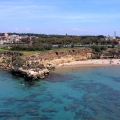
Tor Caldara is a nature reserve located in Anzio, a seaside town in the Lazio region of central Italy. It is known for its pristine beach, crystal clear waters, and stunning natural landscapes. Also the reserve covers an area of approximately 44 hectares. These is home to a diverse range of flora and fauna.
The famous beach of Tor Caldara in Anzio
The main attraction of Tor Caldara is its beach, which stretches for approximately 1 km. It offers visitors the chance to enjoy swimming, sunbathing, and relaxing in the beautiful surroundings. Then the beach is framed by dramatic cliffs and rock formations, which add to its natural beauty.
In addition to the beach, visitors can explore the nature reserve’s network of hiking trails, which wind through the area’s lush vegetation and offer stunning views of the surrounding coastline. The reserve is also home to several ancient Roman ruins, including a well-preserved villa that dates back to the 1st century AD.
The territory of nature reserve in Anzio
Overall, Tor Caldara is an ideal destination for nature lovers, beach-goers, and anyone looking to explore the rich history and natural beauty of the Anzio region.
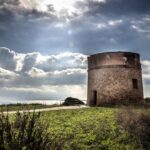
The 44 hectares of Tor Caldara territory are flat. A pleasant walk leads toward the sea, above a cliff of about 15 meters, where it rises Tor Caldara. The tower had the function of controlling the Latium coast between Tor San Lorenzo and Anzio from the raids of Saracen pirates.
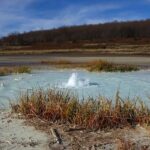
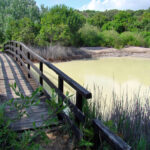
Also the reserve, within itself, has characteristic small sulfur springs. Here it is possible to observe the gurgling of sulfur exhalations.
The characteristic flora of Tor Caldara
The reserve has a characteristic Mediterranean scrub. Indeed it is rich in holm oaks (Quercus ilex), oaks and by numerous cork oaks (Quercus suber). We also find some specimens of Quercus crenata, a botanical rarity. Characteristic vegetation has developed around the sulfur springs, including the common bonnet (Agrostis albula) and the very rare thermal bunting (Cyperus polystachyus).